INDUSTRY:
GAMING
CLIENT:
SONY PLAYSTATION / REPEAT GG
YEAR:
2025/2026
EXPERIENCE:
APP / WEBSITE / GAMIFICATION
Sony Playstation
about
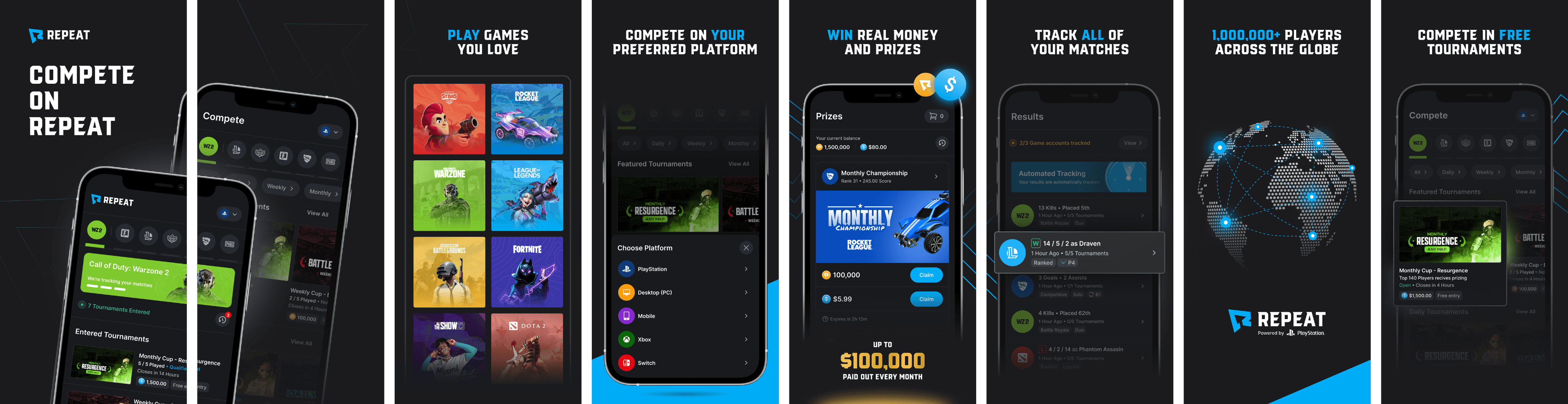
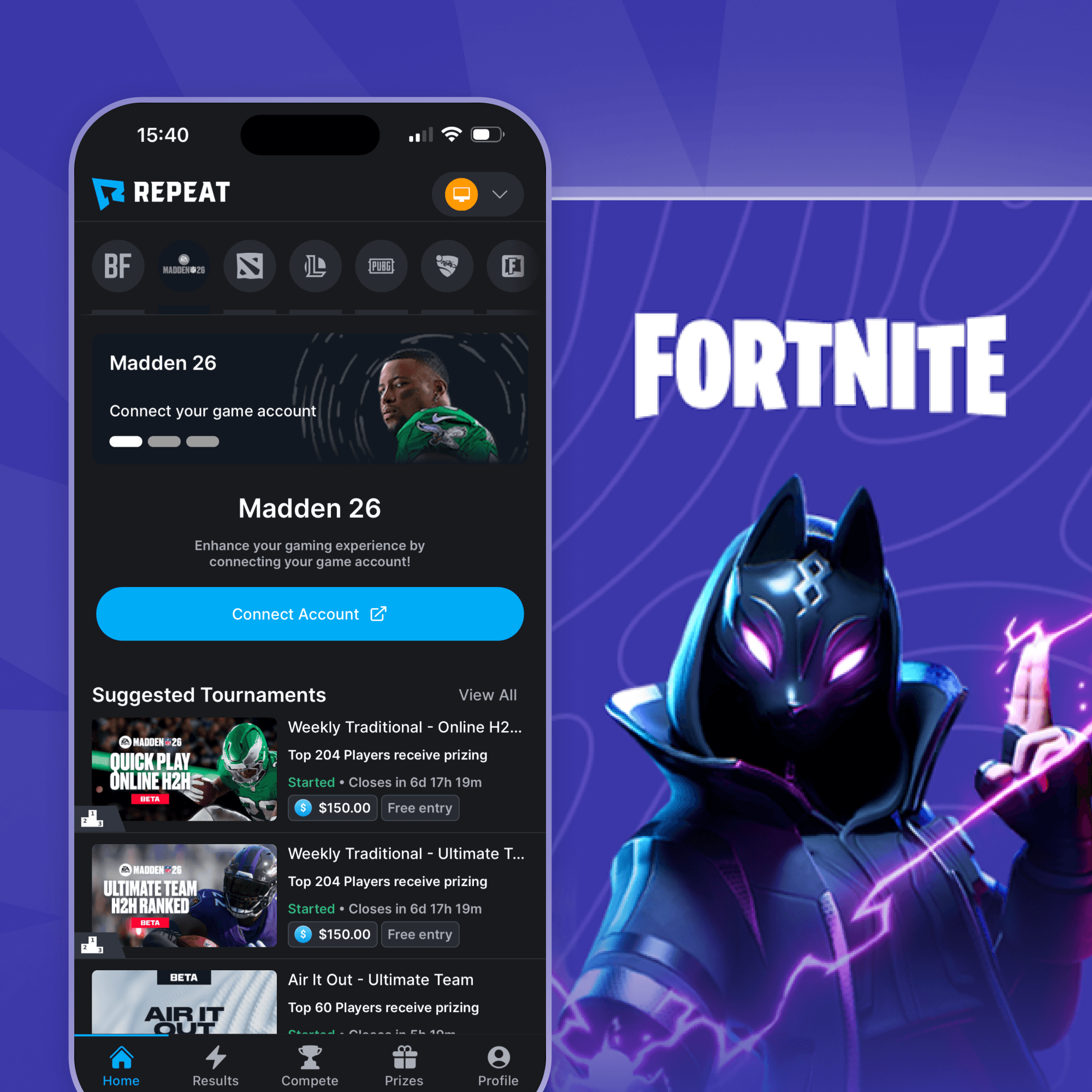
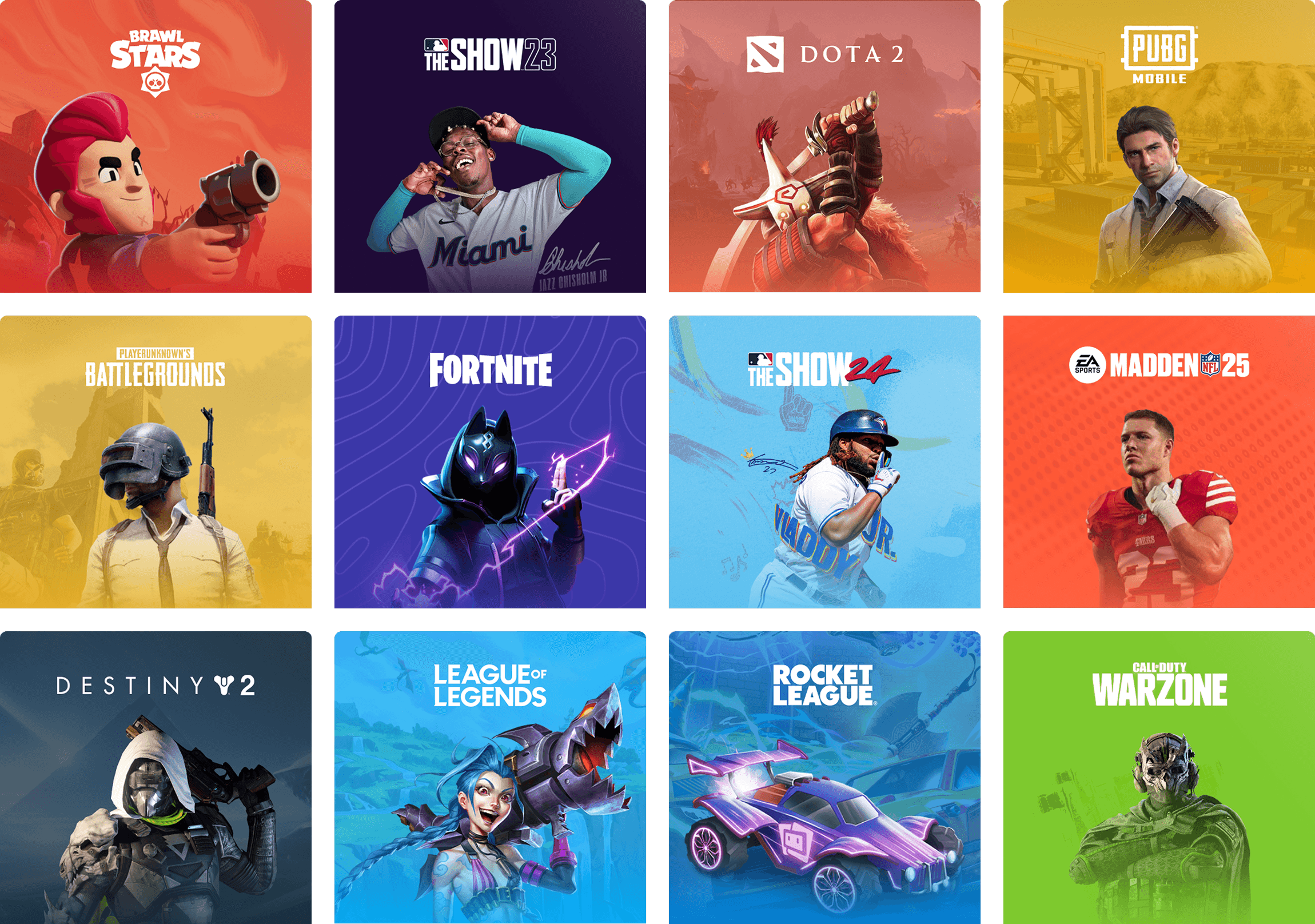
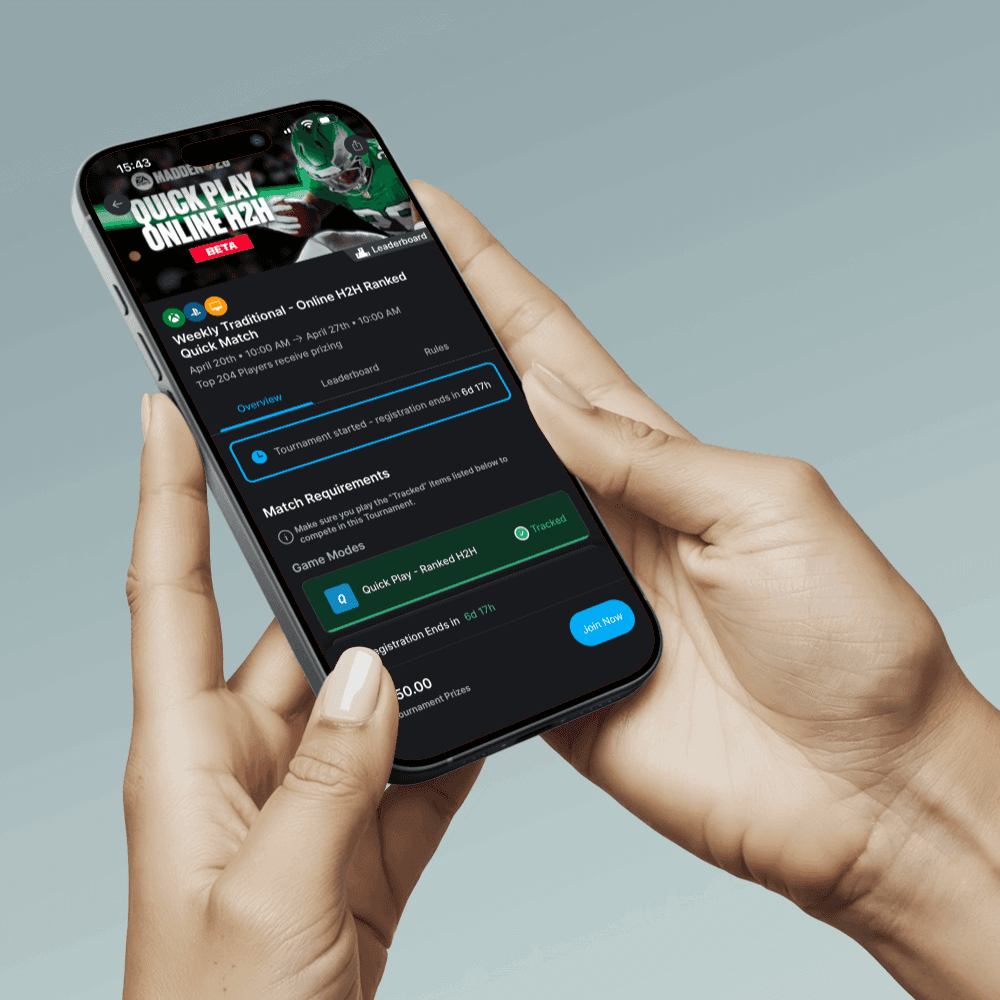
Repeat.gg is a Sony-owned esports platform that enables players to compete in automated tournaments for real money and rewards across titles like Fortnite and Rocket League. By integrating directly with game APIs, the platform removes the need for custom lobbies—allowing users to compete passively while playing standard matches.
Since launch, the platform has supported over 93,000 tournaments, distributed more than $7.8M in cash prizes, and engaged millions of players globally.*
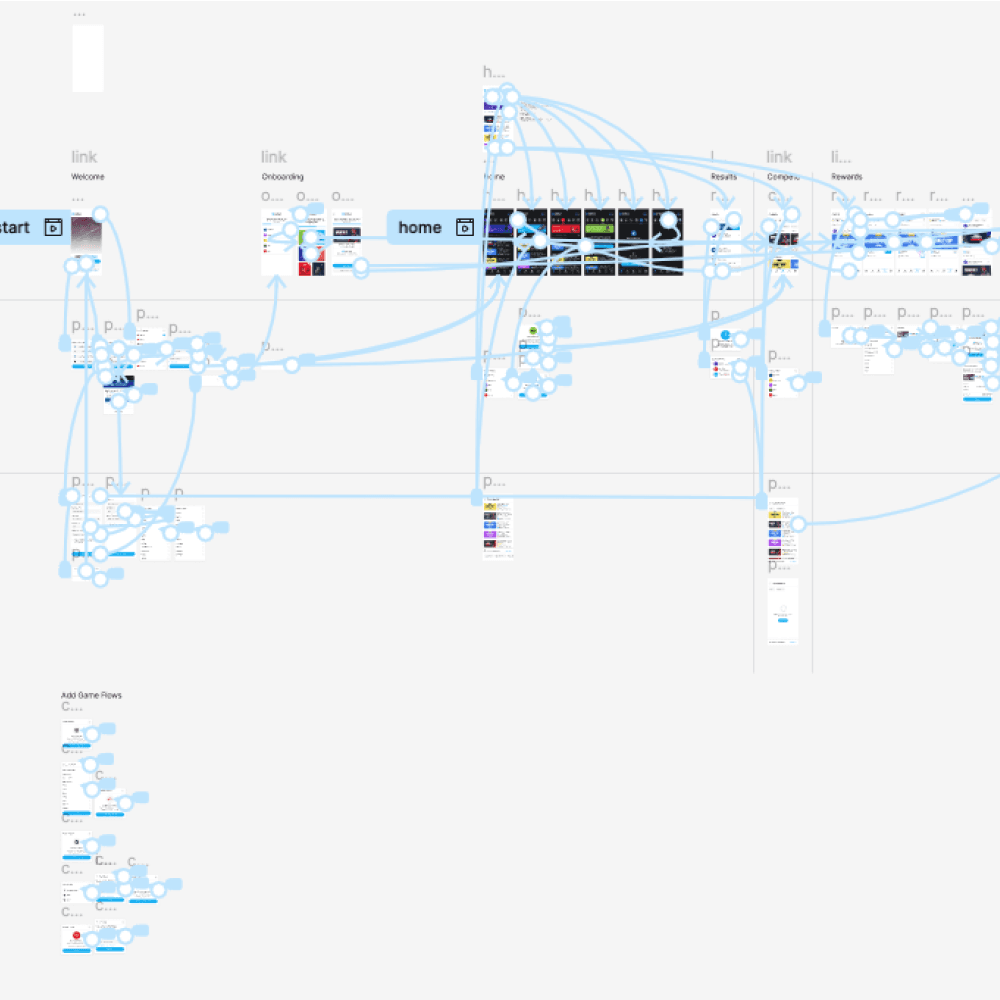
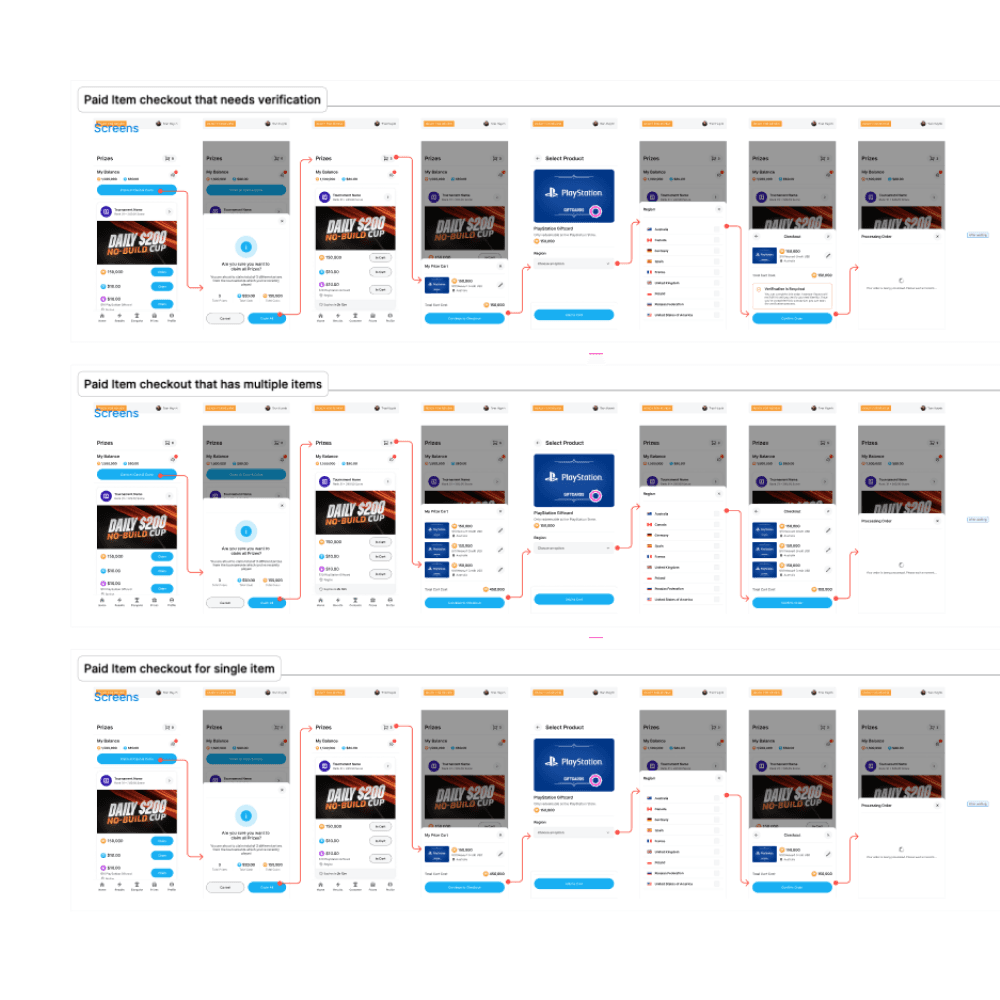
As Lead UX/UI Designer, I worked across four product teams to design and deliver features for both web and app experiences. My focus was on improving delivery speed, reducing ambiguity between design and engineering, and building scalable systems to support a growing and increasingly complex product.
*numbers valid as of end of March 2026
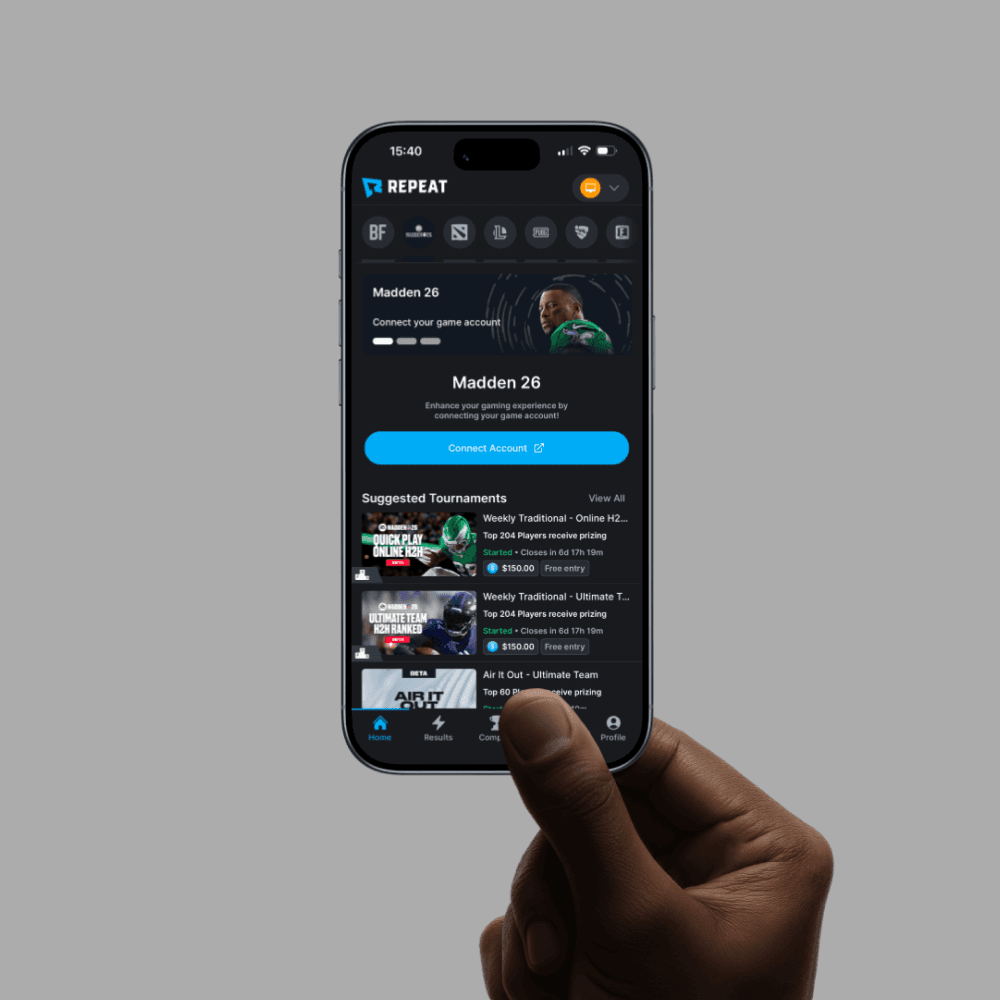
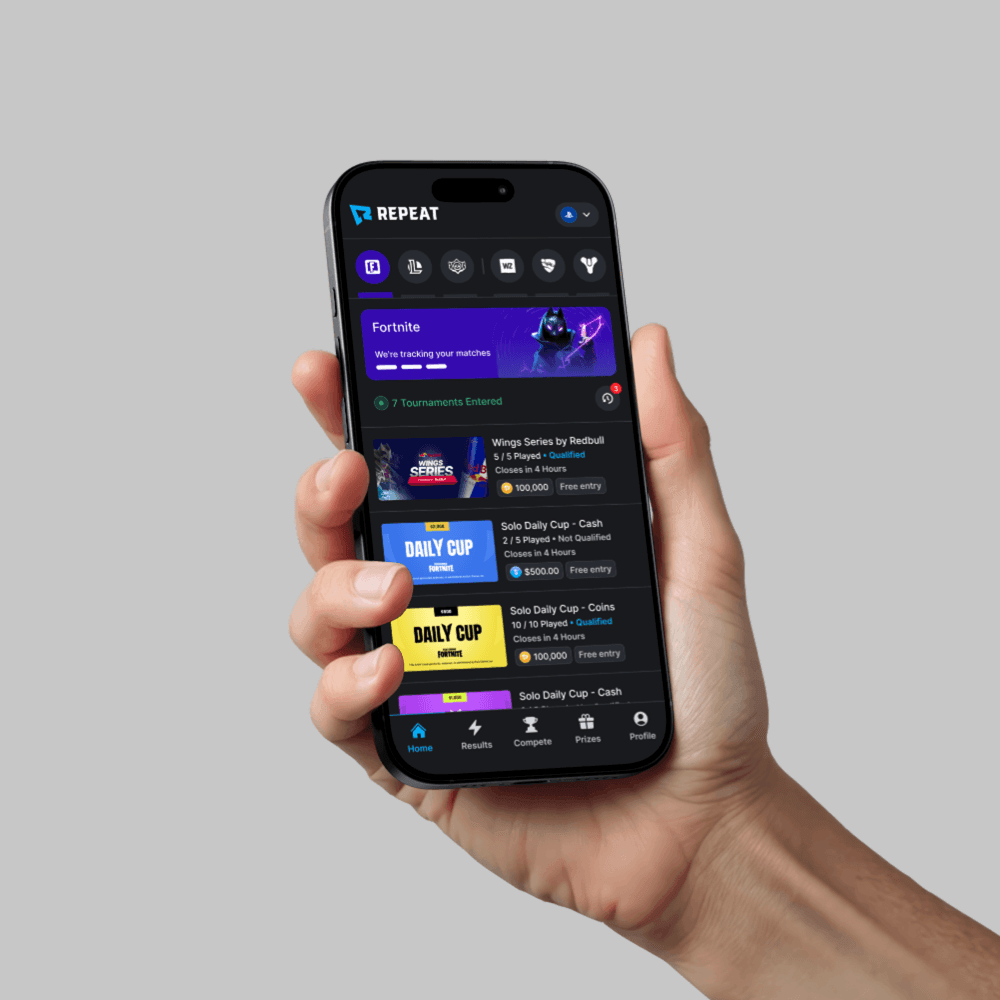
challenge
As the platform scaled, design and development workflows were struggling to keep pace with product demand.
I was brought on as a contractor by Sony Interactive Entertainment specifically to increase product velocity and support multiple teams delivering in parallel.
At the time:
Feature delivery cycles were slow, with design tickets taking 2–3 weeks to complete
UI patterns were inconsistent across the product, creating friction for both users and developers
There was no unified design system, limiting the team’s ability to scale efficiently
Collaboration across four development teams introduced alignment challenges and increased ambiguity during handoff
With growing user demand and increasing tournament activity, improving speed and consistency became critical to ensuring the platform could scale effectively.
the approach
I focused on reducing systemic friction between design and development while enabling the product to scale more efficiently.
1. Building a scalable design system
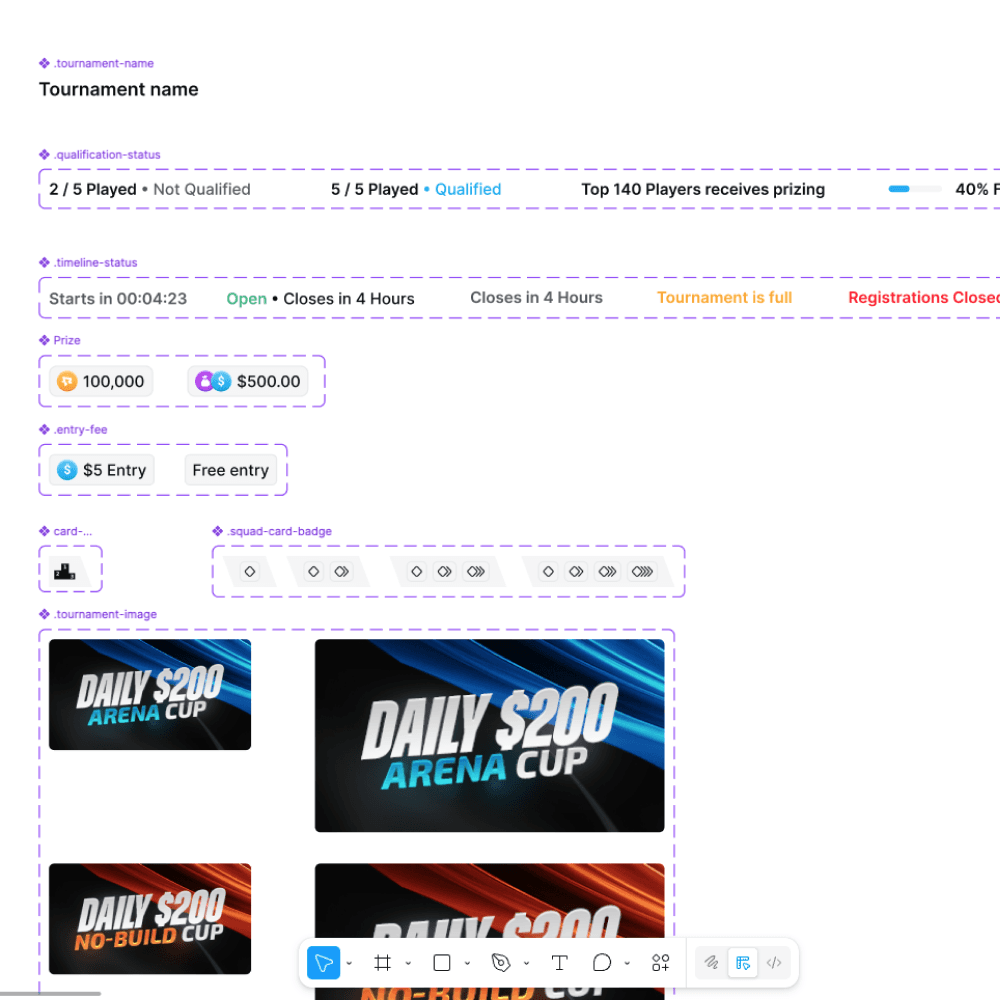
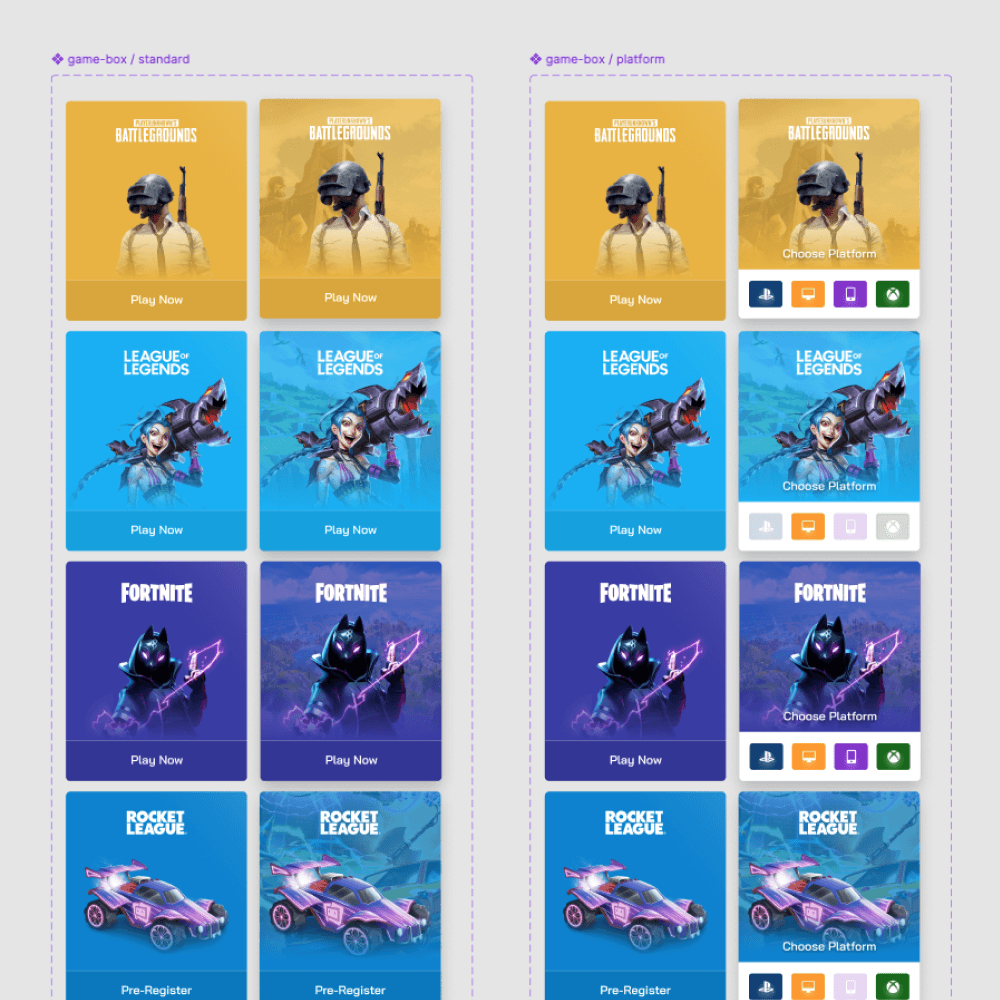
I designed and implemented a new atomic design system from scratch, structured to support both platform consistency and game-specific variations.
Introduced reusable components and patterns aligned to developer needs
Enabled flexible theming to support different game ecosystems without breaking core UX consistency
Ensured the system could scale across both web and app environments
2. Leveraging Figma Variables and AI Tools
To accelerate delivery, I integrated Figma Variable Layering and AI tooling into the design workflow.
Automated repetitive design tasks and reduced manual overhead
Enabled rapid iteration of UI concepts into high-fidelity outputs
Created a more dynamic and adaptable system for future feature development
3. Closing the gap between design and development
A key focus was improving clarity and reducing ambiguity in handoff.
Established clearer design specifications and documentation
Structured outputs to align more closely with engineering workflows
Reduced back-and-forth between teams during implementation
4. Supporting multiple product teams
Working across four Agile teams, I prioritised consistency and efficiency at scale.
Delivered UX/UI solutions across parallel workstreams
Balanced short-term feature delivery with long-term system improvements
Helped standardise design practices across teams
results
The introduction of a scalable design system and improved workflows had a measurable impact on delivery speed and team efficiency.
Design delivery time reduced from 2–3 weeks to 3–4 days
Improved clarity in design handoff significantly reduced development ambiguity
Faster turnaround enabled teams to ship features more consistently across multiple squads
Established a foundation for scalable, system-driven product development
During this period, the platform also supported record-breaking engagement, including the highest number of concurrent users participating in a Rocket League tournament over a single weekend.